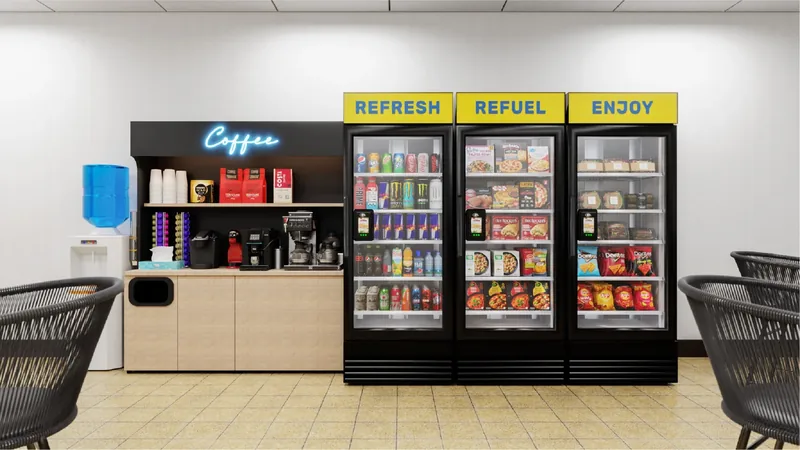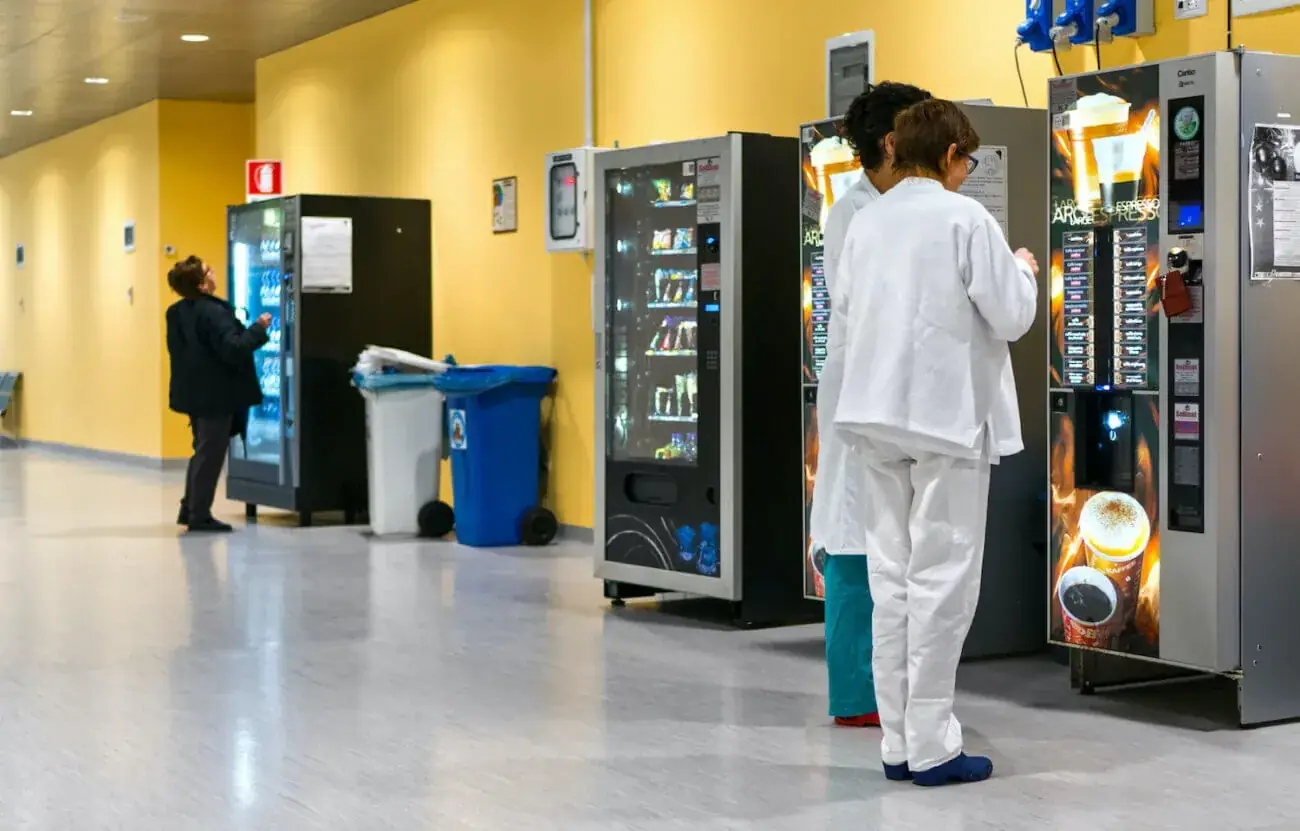
Yes, most businesses can get a vending machine at no cost. In a free placement, the vending operator buys the machine, installs it, stocks it, repairs it, and keeps the revenue from sales. Your business supplies a few square feet of floor space, a standard outlet, and people who get hungry or thirsty during the day.
Because the operator only earns when products sell, free placement is a real business model, not a gimmick. The machine is free, but the agreement behind it is not neutral. The contract, the service promises, and the operator you choose decide whether you end up with a breakroom perk or a broken box in the corner.
How free vending machine placement works
A full-service operator treats your breakroom like a small retail location. They pick equipment that fits the space, set the product mix, restock, collect payments, and fix problems. Their return comes from the margin on every snack and drink sold, which is why operators look closely at headcount, shift schedules, and how many hours a day people are on site.
That model only works when people buy, so a good operator is as interested in your traffic as you are in their service. A well-stocked machine near the time clock gets steady use, especially on second and third shifts when nothing nearby is open.
What free placement does not cover is electricity. The machine runs on your power around the clock. ENERGY STAR says certified refrigerated beverage machines are on average 9% more efficient and save about 1,000 kWh annually, and they come with a low power mode option. Georgia's 2024 average retail electricity price was 11.40 cents per kWh, according to the U.S. Energy Information Administration, so those savings are worth roughly $114 a year on your power bill, not the operator's. It is fair to ask exactly what equipment you are getting.
Is your business a good fit for a free vending machine?
Operators look for steady traffic. A small office with one shift is a different proposition from a distribution center running around the clock. The more people on site and the longer the hours, the easier it is to justify equipment, frequent service, and a wider product selection.
Good signs that a machine will get used:
- Shift work or long hours, when nearby restaurants are closed
- Industrial parks or campuses where a lunch run eats up the whole break, a familiar story with metro Atlanta traffic
- A breakroom with room for the machine and an outlet it can have to itself
It also depends on what people want. A traditional vending machine is great for chips, candy, and cold drinks in a tight footprint. If your team keeps asking for real food, healthier choices, or more variety than a set of coils can hold, a different format may serve them better, which we cover below.
Questions to ask before you sign
Any operator can say free. The answers to these questions tell you what you are really agreeing to.
How long is the contract, and how do we get out?
Read the term, the renewal language, and the removal terms. Watch for multi-year agreements that renew automatically and fees for asking the machine to leave early. A month-to-month agreement keeps the operator earning your business every month.
What happens when something goes wrong?
Machines jam, card readers drop offline, and compressors fail. Ask for a specific response time in writing, not "as soon as we can." In an Atlanta summer, a cooler that goes down in a warehouse without air conditioning means spoiled product and frustrated employees fast.
Refunds deserve the same clarity. When a machine takes money and does not vend, the employee should know exactly who to contact and how quickly they will get their money back. Ask how card refunds are processed, who handles cash refunds, and whether contact information is posted on the machine. If the plan is for your office manager to pay people back out of petty cash, that is your time and your money.
How do employees request products?
The people buying from the machine know what they want. Ask how requests are submitted, who reviews them, and how quickly new items appear. If the answer is "tell the driver," requests will disappear.
Which payments do the machines take?
Most employees will want to tap a card or phone, so modern card readers are a must. Do not assume everyone carries one, though. The FDIC's national survey of unbanked households found that 4.2% of U.S. households, about 5.6 million, were unbanked in 2023, and 66.2% of those households were cash only. Ask which payment methods the machines accept and which platform runs the card readers.
Will the machine work for everyone on your team?
Under FDA vending machine labeling requirements, operators who own or operate 20 or more machines must disclose calorie information for the food they sell, with some exemptions. Ask how the operator complies, and whether they can dedicate space to healthy vending options if wellness matters to your team.
Accessibility matters too. Ask whether the card reader and buttons sit within reach for employees who use wheelchairs. The U.S. Access Board's guide to ADA operable parts uses a reach range of 15 to 48 inches and calls for controls usable with one hand, without tight grasping, pinching, or twisting of the wrist. Placement matters too, so leave clear floor space in front of the machine.
Red flags in free vending offers
- Long terms with automatic renewal. If leaving requires a calendar reminder three years from now, think twice.
- No named contact. You should know who to call, and that person should pick up.
- Vague service promises. "We'll take care of it" is not a response time.
- Cash-only or outdated equipment. Machines without card readers lose sales and frustrate employees.
- Empty coils and expired product. If the operator's other sites look neglected, yours will too. Ask for a reference you can call.
- Pressure to sign today. A good operator lets the service speak for itself.
- Exclusivity that reaches too far. Watch for clauses that also lock up your coffee or every future location.
When a micro market or smart cooler is a better fit than a vending machine
A vending machine is the right call for plenty of breakrooms, but it is not the only free option. Two newer formats offer more variety and fresh food, and at VendGO they come with the same $0 equipment, installation, and service.
A micro market is an open, self-checkout store: employees shop shelves and open coolers, then scan and pay at a kiosk. An AI smart cooler is a locked fridge: tap a card to unlock it, grab what you want, and cameras and sensors charge you automatically.
| Format | Best for | What it holds | How people pay |
|---|---|---|---|
| Vending machine | Tight spaces and quick snacks | Packaged snacks and cold drinks | At the machine |
| Micro market | Teams that want variety in an employee-only space | Shelves and open coolers with snacks, drinks, and fresh meals | Self-checkout kiosk |
| AI smart cooler | Smaller footprints or sites with public access | Fresh meals, drinks, and snacks behind a locked door | Tap a card to unlock, charged automatically |
Choosing between a market and a cooler comes down to your preference and the type of business, not headcount. A site open to the public may suit a locked smart cooler better than an open market. Micro market layouts scale with your team, from 25 to 75 employees up to 350 or more. For a deeper comparison, read our guide to micro markets vs vending machines, or take the Help Me Choose quiz for a recommendation.
How free placement works with VendGO
VendGO is a locally owned breakroom company based in Alpharetta, serving businesses across metro Atlanta. Equipment, installation, and service cost your business $0, agreements are month to month with no long-term contract, and you can start with a two-month trial.
- Two-hour response time when something needs attention
- Two dedicated account managers on every account, plus direct access to the owner instead of a call center
- Employees scan a QR code to request products, and requests are filled within 3 days
- Cashless payments by card and mobile wallet through Cantaloupe, 365 Retail Markets, Nayax, and HAHA smart coolers
- Optional subsidies if you want to cover part or all of the price for employees
Whether you run a corporate office or a three-shift manufacturing facility, we will tell you straight whether a machine, market, or cooler makes the most sense. Request a free consultation or call 678-848-5199.
Frequently asked questions
Is a free vending machine really free?
Yes. The operator owns, stocks, and services the machine and earns its money from product sales. Your business provides the floor space, a standard outlet, and the electricity to run it.
How many employees do I need to get a free vending machine?
It depends on the operator and the site. Operators weigh headcount, shifts, and hours on site, so ask what they recommend for your specific location and why.
Can I get a free micro market instead of a vending machine?
Often, yes. VendGO provides micro market equipment, installation, and service at $0 to the business, with layouts sized from 25 to 75 employees up to 350 or more. See how much a micro market costs for the full picture.
Can I cancel a vending machine contract?
That depends on what you signed, so check the term, any automatic renewal clause, and removal fees before you commit. VendGO uses month-to-month agreements, so you are never locked in.