Some product will leave any open micro market without being scanned. The good news is that a breakroom is not a public store. It serves a known group of coworkers, usually behind a badge door, and a handful of practical controls keep losses low: visible cameras, a kiosk on the path out, smart placement, inventory software that flags gaps early, and a culture where paying is simply what people do.
Where those controls are not enough, an AI smart cooler stays locked until someone taps a card. Here is how each piece works, and what a good operator does when the numbers slip.
How much theft happens in retail, and what counts as shrink?
Retailers call missing inventory "shrink." The National Retail Federation's 2023 National Retail Security Survey found an average shrink rate of 1.6% in fiscal 2022, which works out to $112.1 billion in losses across U.S. retail. The NRF's later Impact of Retail Theft and Violence 2024 report found the average number of shoplifting incidents per year up 93% in 2023 compared with 2019.
The detail that matters most for a breakroom is what shrink is made of. As CNBC reported on the NRF survey, external theft was the largest source, but internal theft made up 28.85% and process and control failures 27.29%. In a micro market, some of what looks like theft is really a mis-scanned item, a product set up wrong in the system or a delivery counted short. Fix the process, and part of the problem goes away.
Why the honor system works better at work than in a store
Micro markets depend on people paying when nobody is watching the register, and the research on that is encouraging. Economist Steven Levitt studied a man who sold bagels and doughnuts to offices on the honor system for years. In Dubner and Levitt's New York Times Magazine story, the overall payment rate was about 87%, offices with a few dozen employees outpaid offices with a few hundred by 3 to 5 percent, and offices where people liked their boss and their work paid best.
Small cues matter too. In a Newcastle University study of an honesty box for drinks in a university coffee room, people paid nearly three times as much when an image of a pair of eyes was displayed than when a control image was. That is the whole case for making cameras and screens visible rather than hidden.
Culture is the part employers control. A market that is clean, well stocked and fairly priced feels like a perk, and people tend to protect a perk they would hate to lose.
Cameras: visible, and actually reviewed
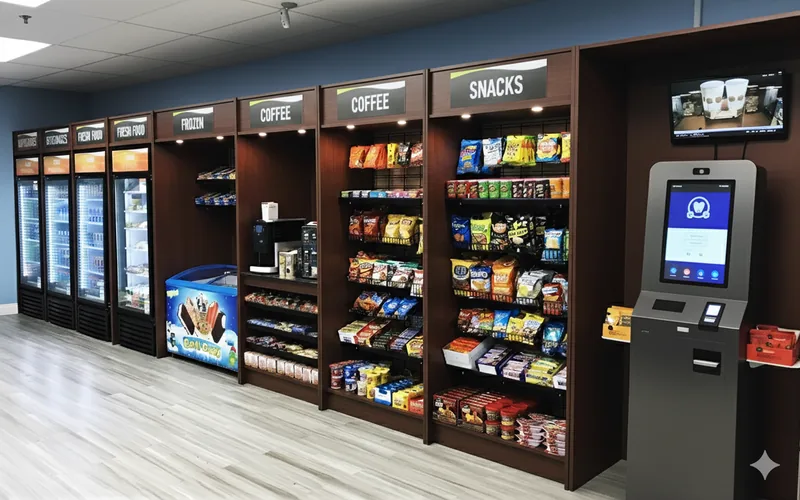
Cameras should cover the kiosk and every cooler and shelf, with clear signs that the area is recorded. A screen near the kiosk showing the live feed tells every shopper, in the plainest way possible, that someone can see them.
Cameras only work if someone looks at the footage. Arizona State University's Center for Problem-Oriented Policing notes that in one evaluation, the effect of CCTV on shoplifting was marked in the first few months after installation and then declined rapidly. Once people sense nobody follows up, a camera becomes decoration. Reviewing footage whenever counts come up short keeps the deterrent real.
Kiosk design, layout and placement
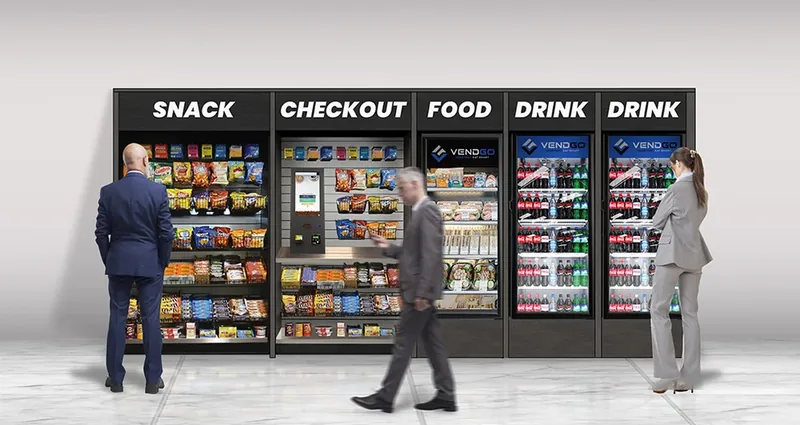
- Put the kiosk on the way out. Shoppers should pass it naturally between the coolers and the door, so paying is the path of least resistance.
- Keep checkout fast. A long line or a card reader that keeps failing is the easiest excuse to skip paying. Card and mobile wallet payments keep the line moving at shift change.
- Keep sight lines open. That same ASU guide recommends clear sight lines and lower displays so an area is easy to watch. In a breakroom, that means no tall racks blocking the view from the tables.
- Move the most-taken items toward the kiosk. Whatever goes missing most often belongs where the camera and other shoppers can see it, the same way retailers move hot products into higher-surveillance zones.
Location is the strongest control of all. A market inside an employee-only breakroom serves people who see each other every day. A market in a lobby, a shared building corridor or a space with constant visitors loses that accountability.
Shift work raises its own questions. Many metro Atlanta distribution centers and plants run around the clock, and an overnight crew may have the breakroom mostly to itself. Good camera coverage and a spot near a common area help, and our page on warehouse breakrooms has more on serving those teams.
For spaces open to residents, guests or the public, such as apartment communities, a locked option is usually the better choice.
Inventory software: catching the gap early
Every scan at the kiosk is recorded by item and time. When the market is restocked and the shelves are counted, the gap between what sold and what left the shelf is your shrink, and the data shows which items and which days are the problem.
That is where the real fixes come from. If one item keeps disappearing on weekends, you can move it, review the weekend footage or swap it out. If counts are off across the board, look at the process first: product setup, pricing and delivery counts.
AI smart coolers: the locked alternative
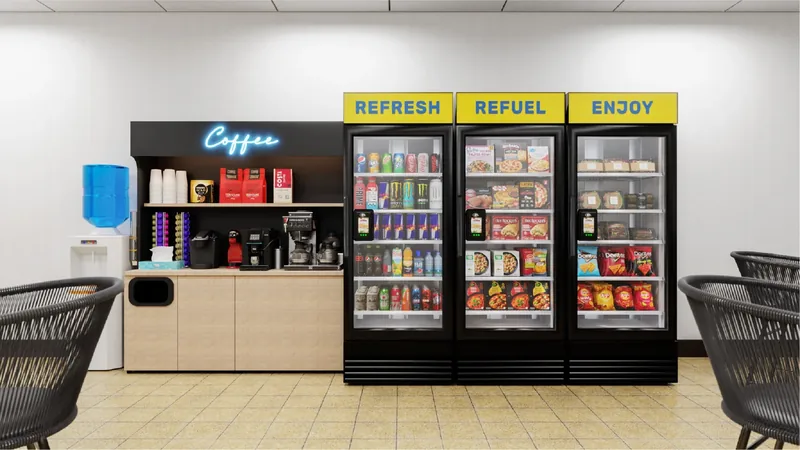
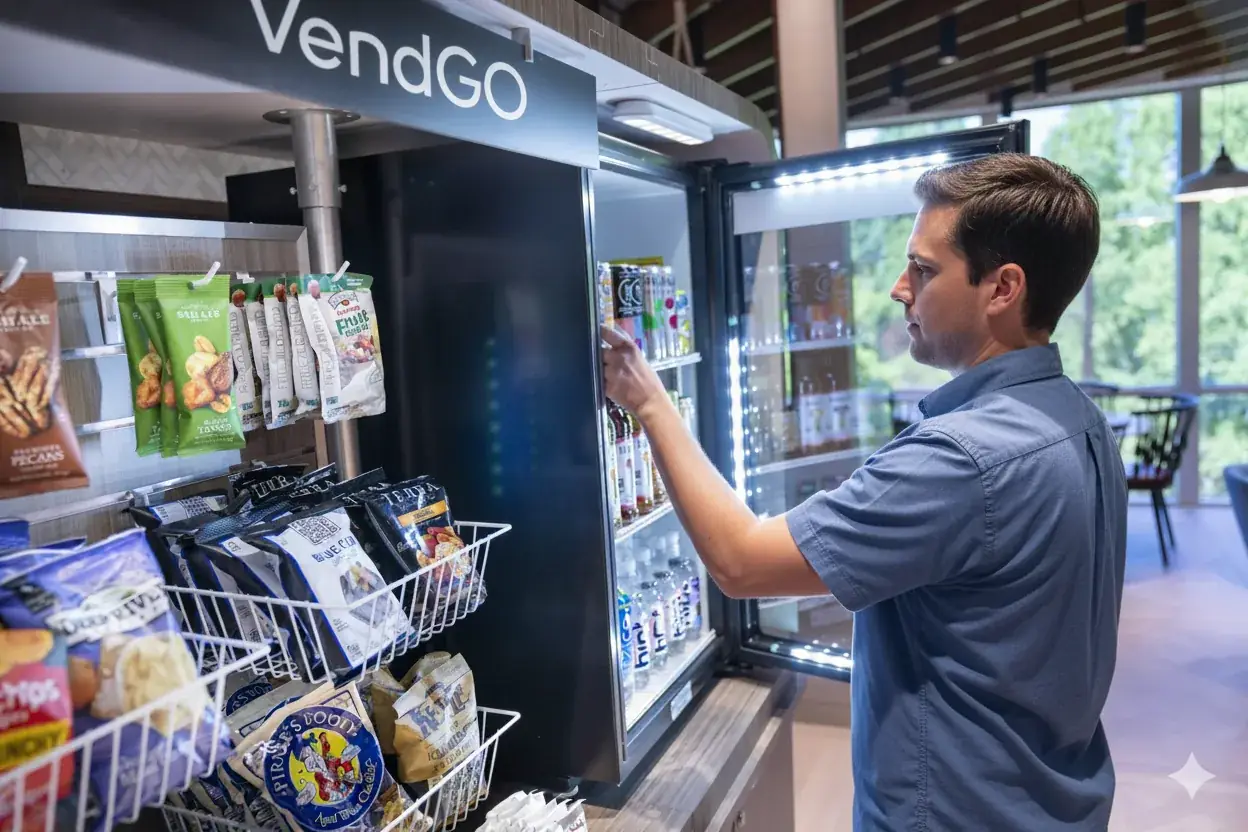
An AI smart cooler takes most of the open-shelf risk off the table. The door stays locked until someone taps a card or mobile wallet. They take what they want, close the door, and cameras and sensors charge them automatically for what they took. Every visit starts with a payment tap, so there is no anonymous grab.
The trade-off is selection. A cooler holds less than a full micro market, and everything has to fit inside one locked cabinet. For the full picture, see our micro market vs vending machine comparison. At VendGO, the choice between a market and a cooler depends on your preference and the type of business, not headcount.
What operators do when shrink starts to climb
A good operator treats shrink as a shared problem with the employer, not an accusation. The usual playbook looks like this:
- Pull the sales data and pinpoint the items and time windows where counts fall short.
- Rule out process errors such as mis-keyed products, pricing mistakes and delivery counts.
- Review camera footage for those windows.
- Adjust the layout, move high-risk items toward the kiosk and add clear signage.
- Ask the site contact to send a short, friendly reminder that the market depends on everyone paying.
- If losses continue, move some or all of the product into a smart cooler.
Another lever is a subsidy. When an employer covers part or all of the price, the temptation to skip the kiosk shrinks with it. If you are weighing the whole picture, our guide to what a micro market costs explains who carries which expense.
A breakroom market you can trust, from a local owner
VendGO is a locally owned breakroom company in Alpharetta, and customers talk to the owner, not a call center. Equipment, installation and service cost your business $0, every account has two dedicated account managers, and when something needs attention, our response time is two hours.
Agreements are month-to-month with a two-month trial, so you can see how a market or smart cooler performs in your space before you commit. Request a free consultation or call 678-848-5199.
Frequently asked questions
How do micro markets prevent theft?
They layer several controls: visible cameras, a self-checkout kiosk on the path out, placement in employee-only areas, and inventory data that shows which items go missing and when. Higher-risk sites can use AI smart coolers that unlock only with a card tap.
What is a normal shrink rate for a micro market?
It varies by site, so the most useful benchmark is your own counts over time. For context, the National Retail Federation put average U.S. retail shrink at 1.6% in fiscal 2022.
Do employees steal from micro markets?
Some loss happens, but a workplace market serves a known group of coworkers, which works in its favor. Honor-system research shows that smaller groups and visible cues of being watched both raise payment rates.
Are AI smart coolers more secure than micro markets?
Yes. The door stays locked until someone taps a card or phone, and cameras and sensors charge automatically for what they take, so there is no anonymous grab.