A complete office pantry checklist covers six categories: snacks, drinks, coffee and tea supplies, condiments and basics, paper goods, and cleaning supplies. Stock each one by headcount and real usage, keep the fridge at 40°F or below, and keep allergen information visible.
Use the lists below to audit what you have today, then set par levels so nobody is making an emergency store run every Friday afternoon.
Snacks: the core of the office pantry checklist
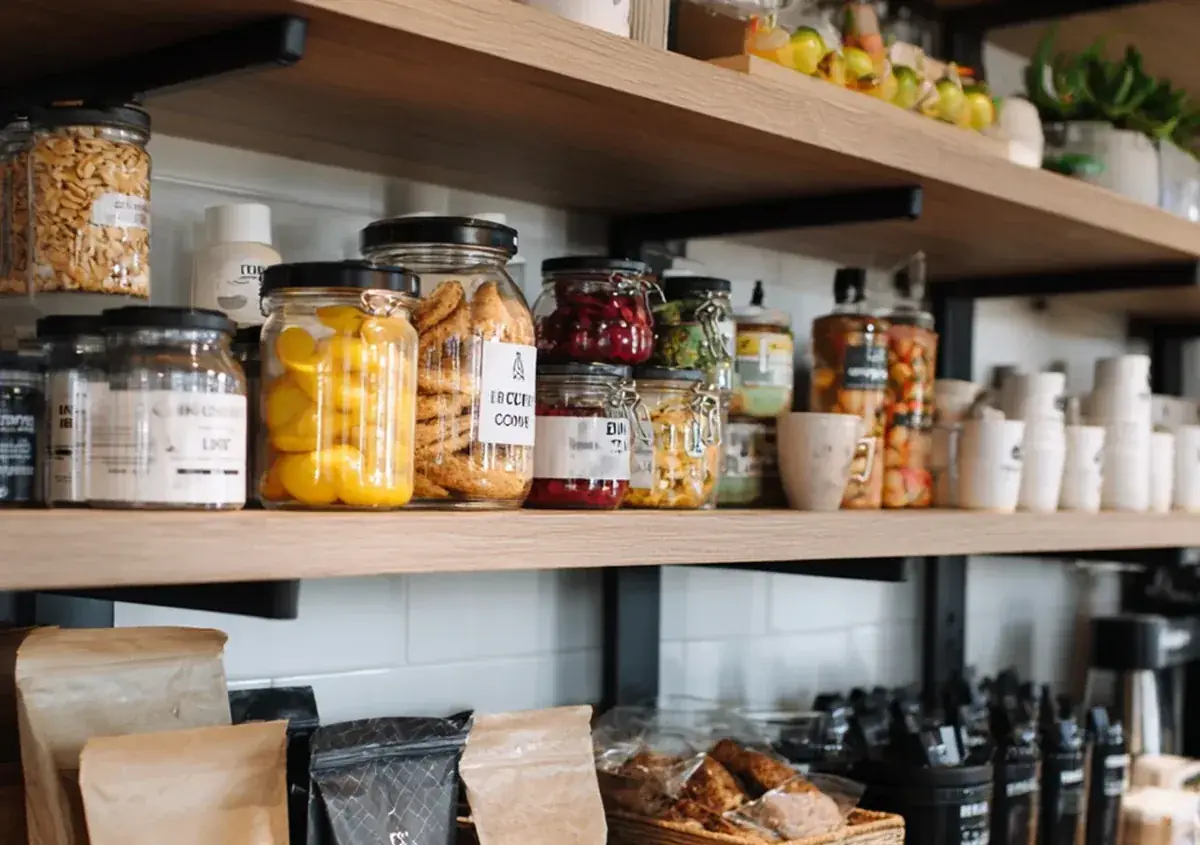
Aim for a mix so every shelf has something salty, something sweet and something with protein. Variety matters more than volume.
- Salty: chips, pretzels, popcorn, crackers
- Sweet: cookies, granola bars, dark chocolate, dried fruit
- Protein: nuts, trail mix, jerky, cheese crackers, protein bars
- Lighter options: rice cakes, roasted chickpeas, fruit and nut bars
- Fresh, if you have a fridge: whole fruit, yogurt, cheese sticks, hummus cups
- Gluten-free and nut-free options, clearly separated from everything else
For more ideas on the better-for-you side, see our list of healthy office snacks.
Drinks checklist
- Bottled water and sparkling water
- A small selection of regular and diet sodas
- Unsweetened iced tea and juice
- Sports and electrolyte drinks, especially for warehouse and plant teams
- Canned coffee and energy drinks, if your team asks for them
- Milk, plus a shelf-stable or non-dairy option
If cold drinks are disappearing faster than you can restock, a beverage vending machine can carry the paid, cold selection while the pantry covers the free basics.
Coffee and tea station supplies
- Regular and decaf coffee in the format your brewer uses (beans, ground or pods)
- Filters, if your machine needs them
- A tea assortment: black, green and herbal
- Creamers: milk or half-and-half, plus a non-dairy option such as oat or almond
- Sugar, raw sugar and zero-calorie sweeteners
- Hot cocoa packets for the non-coffee crowd
- Cups, lids, sleeves and stir sticks
- Descaling solution and a written cleaning schedule for the brewer
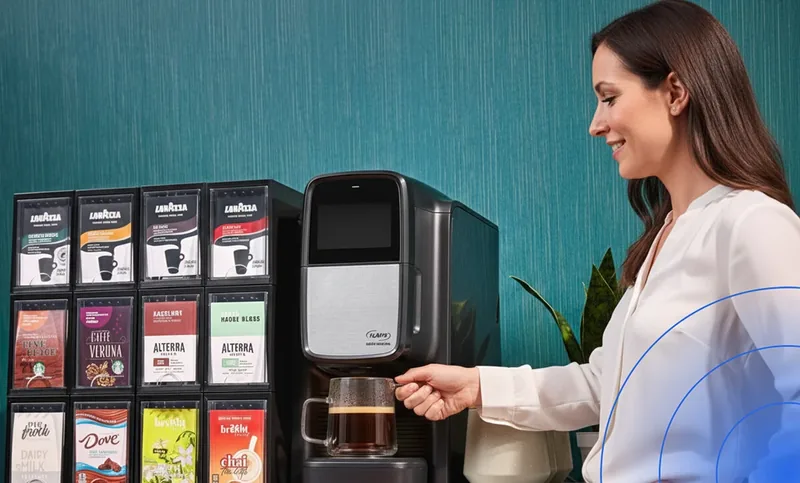
Coffee is the first thing people notice when it runs out. An office coffee service takes the ordering, equipment and maintenance off your desk entirely.
Whoever runs it, keep a backup bag or box of coffee on the shelf at all times. Running out at 8 a.m. on a Monday is the complaint you will hear about for weeks.
Condiments, paper goods and cleaning supplies
Condiments and basics
- Salt, pepper and hot sauce
- Ketchup, mustard, mayo and soy sauce packets
- Honey and peanut butter, stored away from nut-free items
- Oatmeal and cereal cups for people who skip breakfast
Paper goods
- Napkins and paper towels
- Plates, bowls and utensils
- Cups for water and cold drinks
- Storage bags or containers, plus labels and a marker for dating leftovers
Cleaning supplies
- Dish soap, sponges and a drying rack
- Disinfecting wipes and spray for counters, handles and the microwave
- Hand soap at every sink
- Trash bags, recycling bins and lidded bins for food waste
In plants and warehouses, OSHA's sanitation standard applies directly. Under 29 CFR 1910.141, food waste receptacles must be emptied at least once each working day (unless unused), and no food or drink may be eaten or stored in a toilet room or any area exposed to a toxic material.
How much to stock per headcount
There is no universal number, because a 40-person agency and a 300-person distribution center snack very differently. The reliable method is to set a starting estimate, measure for two weeks, and adjust.
- Start with a planning assumption, for example one snack and one drink per person per working day, plus coffee for your regular coffee drinkers.
- Multiply by the days between restocks. On that assumption, a 50-person office restocking weekly would start with about 250 snacks and 250 drinks.
- Add a cushion for meetings, visitors and hot summer weeks, when cold drinks move faster in a metro Atlanta July.
- Track what runs out first and what expires on the shelf, then shift quantities toward what actually gets eaten.
- Set par levels for each item: the minimum on hand that triggers a reorder.
| Team size | Starting pantry footprint | Watch for |
|---|---|---|
| 25 to 75 | A few shelves, one refrigerator, one coffee station | Favorites selling out midweek |
| 75 to 150 | A dedicated pantry wall or room with more cooler space | Lines at the coffee machine |
| 150 to 250 | Stations on more than one floor or area | Uneven stock between stations |
| 250 and up | Several stations, often paired with a market | Waste on slow-moving items |
At larger headcounts it can make sense to move paid items into a micro market and keep the free pantry focused on coffee and basics, which keeps the budget predictable.
Food safety and allergen basics
A pantry is a shared kitchen, so a few simple rules keep it safe:
- Keep it cold. The CDC advises keeping the refrigerator at 40°F or below and the freezer at 0°F or below. An inexpensive appliance thermometer takes out the guesswork.
- Follow the two-hour rule. According to FoodSafety.gov, perishable food should not sit out of the fridge for more than 2 hours, or 1 hour above 90°F. That includes leftover catering from the lunch meeting. The same page recommends scrubbing hands with soap for at least 20 seconds.
- Rotate stock first in, first out. The USDA Food Safety and Inspection Service explains that a "best if used by" date describes quality, not safety, and estimates that 30 percent of the food supply is lost or wasted at the retail and consumer levels. Moving older items to the front cuts your share of that waste.
- Clean out the fridge weekly. Pick a day, announce it, and toss anything unlabeled or past its date.
Allergies deserve their own plan. CDC's National Center for Health Statistics reports that 6.7% of U.S. adults had a food allergy in 2024, roughly 1 in 15 people. The FDA lists nine major food allergens: milk, eggs, fish, crustacean shellfish, tree nuts, peanuts, wheat, soybeans and sesame.
- Keep items in their original packaging so the ingredient list and "Contains" statement stay visible.
- Give nut-free and gluten-free items their own shelf or bin, above other items.
- Label anything repackaged or homemade with its ingredients.
- Ask about allergies during onboarding and before catered events.
How a managed pantry program works
Running a pantry yourself means someone, often the office manager, spends hours each week ordering, unpacking, rotating and wiping down shelves. A managed office pantry program hands that work to a provider. A typical setup looks like this:
- Walkthrough: the provider looks at your space, headcount and shift schedule.
- Menu: you choose the mix of snacks, drinks and coffee, including healthy and allergy-friendly items.
- Stocking: the provider delivers, fills the shelves, rotates product and pulls anything near its date.
- Feedback: employees request new items, and the mix shifts toward what actually gets eaten.
- Billing: in most pantry programs the company covers the product and employees take what they need. Some workplaces pair a free pantry with a paid or subsidized market.
The model fits corporate offices that want the office to feel worth the commute, and plants and warehouses where nobody has time to run to the store between shifts.
Get your office pantry handled by VendGO
VendGO runs office pantry programs, coffee service, micro markets and AI smart coolers for businesses across metro Atlanta, including Sandy Springs, Gwinnett and Cobb. We are locally owned and based in Alpharetta, so you deal with the owner, not a call center.
Every account gets two dedicated account managers and a two-hour response time when something needs attention. Employees can scan a QR code to request items, and requests are filled within 3 days. Equipment, installation and service cost the business $0, agreements are month-to-month, and you can start with a two-month trial.
Request a free consultation to get a pantry plan for your team, or call 678-848-5199.
Frequently asked questions
What should be on an office pantry checklist?
Six categories: snacks, drinks, coffee and tea supplies, condiments and basics, paper goods, and cleaning supplies. Within snacks, aim for a mix of salty, sweet, protein and allergy-friendly options.
How often should an office pantry be restocked?
It depends on headcount and how fast items move. Track usage for two weeks, set a par level for each item, and restock whenever an item drops below it, or let a managed pantry provider handle the schedule.
How do you handle food allergies in a shared office pantry?
Keep products in their original packaging so the allergen statement is visible, give nut-free and gluten-free items their own shelf, and label anything repackaged. The FDA's nine major allergens are milk, eggs, fish, crustacean shellfish, tree nuts, peanuts, wheat, soybeans and sesame.
What is the difference between an office pantry and a micro market?
In a pantry, the company typically covers the product and employees take what they need. In a micro market, employees buy items at a self-checkout kiosk, and the company can subsidize prices if it wants; see how much a micro market costs.